





Something breaks, something needs hanging, or you're finally tackling that first DIY job. You reach for a tool and come up empty. It happens to everyone at some point — either you own nothing, or you have a random collection that never includes what you actually need.
This guide cuts through the noise. Here is exactly what tools you need at home, in the order you should buy them.
The Non-Negotiables: Buy These First
These are the tools that cover 80% of everyday home jobs. If you own nothing, start here.
Hammer
A 16oz claw hammer handles nails, picture hooks, and light demolition. The claw end pulls nails cleanly. Look for a fibreglass or rubber-grip handle — it absorbs shock and lasts longer than wood.
Tape Measure
Buy a 5-metre tape with a lockable blade. You will use this constantly — furniture sizing, curtain rails, floor measurements. A loose hook gives inaccurate readings, so do not cheap out here.
Screwdriver Set
You need both flathead and Phillips, in at least three sizes each. Magnetic tips make starting screws easier. A good set covers cabinet assembly, electrical faceplates, and furniture fixings without reaching for anything else.
Cordless Drill/Driver
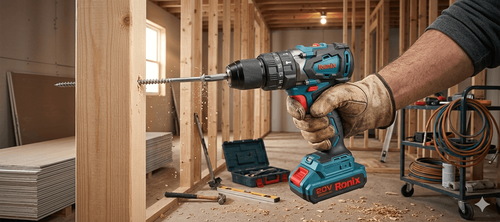
The single most useful power tool in a home kit. A 12V to 18V cordless drill handles screwing, drilling into wood, plasterboard, and light masonry. Look for variable speed control, a clutch to avoid stripping screws, and a keyless chuck for quick bit changes.
Buy into one battery ecosystem from the start. Sticking to one brand means your batteries work across every tool you add later. Browse our cordless drill range for options suited to everyday home use.
Spirit Level
Essential for anything that needs to be straight — shelves, curtain poles, picture frames, tiles. A 60cm aluminium level is the most practical size, with both horizontal and vertical vials.
Utility Knife
Constantly useful and easy to overlook. Box opening, trimming wallpaper, scoring drywall. Buy one with snap-off blades so you always have a sharp edge ready.
Pliers
Two types cover almost everything. Combination pliers grip and cut wire. Needle-nose pliers reach tight spaces and bend wire with precision.
Adjustable Wrench
One good adjustable wrench replaces a full set of fixed spanners for most home jobs — plumbing fittings, tap spindles, furniture bolts. A 250mm wrench is the most practical size.
Pipe and Cable Detector
Before you drill anything into a wall, you need to know what is behind it. Kitchens and bathrooms especially hide water pipes and electrical cables just beneath the surface. A basic detector costs very little and prevents very expensive mistakes. Never skip this step.
The Second Layer: Add These When You Start Projects
The non-negotiables handle daily fixes. These tools become essential the moment you take on a real project — and frustrating to be without when you need them.
Jigsaw
The most versatile cutting tool for a home workshop. Cuts curves, straight lines, and complex shapes in wood, laminate, and thin metal. If you are fitting worktops, trimming shelves, or doing any carpentry work, a jigsaw earns its place quickly. Change the blade for the material and it handles most cutting jobs cleanly.
Circular Saw or Miter Saw
Where the jigsaw handles detail, a circular saw handles long straight cuts fast. Ideal for sheet materials, floorboards, and timber to length. A miter saw is the better choice if you regularly cut timber at angles — skirting boards, framing, shelving. More accurate and faster than a jigsaw for any straight work.
Angle Grinder
Essential for cutting metal, grinding welds, and removing rust. Also cuts tiles cleanly with a diamond disc. A 115mm or 125mm grinder covers most home and workshop jobs. Always match the disc to the material — cutting discs for metal, grinding discs for surface work, diamond discs for masonry and tile.
Pipe and Cable Detector
If you did not buy one with the non-negotiables, buy it now. Any project that involves drilling into walls makes this non-negotiable. One hidden pipe or cable changes the entire job.
Sealant Gun
Bathrooms, kitchens, window frames — anywhere that needs a clean watertight seal. A decent sealant gun applies silicone and acrylic smoothly and evenly. Far easier to control than squeezing from a tube, and the finish shows the difference.
How to Buy Smart
Getting tools wrong costs more than getting them right the first time. A few principles worth following.
Stay in one battery ecosystem
If you are going cordless — and you should — pick one brand and stick with it. Most major brands offer drills, saws, grinders, torches, and more on the same battery platform. The batteries you already own power everything you add later. Mixing brands means buying extra batteries every time, and the costs add up fast.
Do not cheap out on tools you use daily
Your tape measure, screwdrivers, and cordless drill get used constantly. Buy these once at a decent quality level. Budget tools wear out quickly, give inaccurate results, or fail mid-job. For specialist tools you might use twice a year, mid-range is perfectly fine.
Buy kits when starting out
A drill and driver kit with two batteries and a charger gives significantly better value than buying components separately. Kits are designed for first purchases. As your collection grows, buying individual tools makes more sense.
Browse our power tool range for corded and cordless options from trusted brands — whether you are building a first kit or adding to an existing one.