





Your chainsaw chain is worn out, damaged, or snapped. Now you need a replacement. Simple, right? Not exactly. Chainsaw chains are not one size fits all, and ordering the wrong size can waste money and even damage your saw.
If you are wondering how to measure chainsaw chain correctly, you are not alone.
You need three key measurements: pitch, gauge, and drive links. Plus, you should know how to measure chainsaw bar length. In this guide, you will learn exactly what to check so you can order the perfect replacement with confidence.
Understanding Chainsaw Chain Specifications
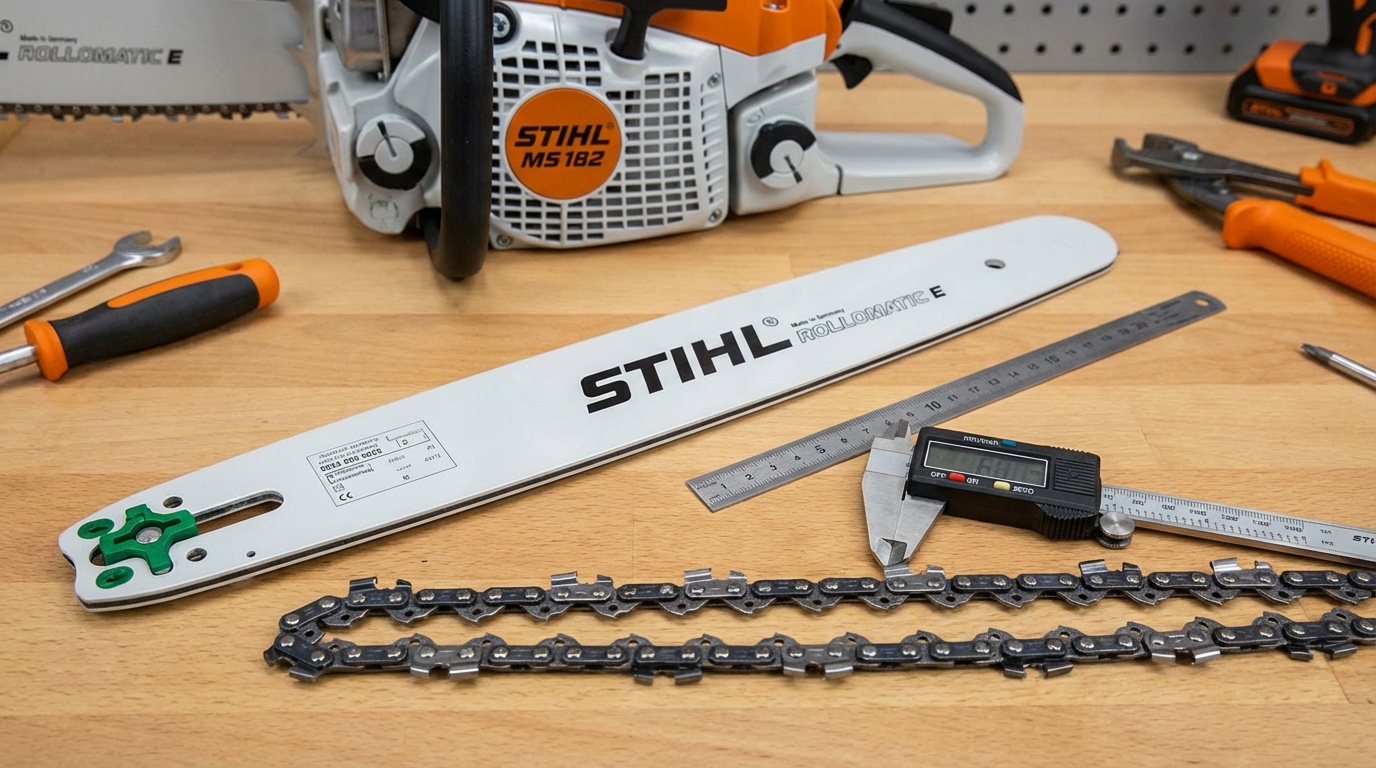
Before you order a replacement, you need to understand what actually defines a chainsaw chain. Every chain is identified by three critical measurements: pitch, gauge, and drive links.
If even one of these is wrong, the chain will not fit properly and could damage your saw.
What Are the 3 Chainsaw Chain Measurements?
Every chainsaw chain is defined by:
- Pitch – the size of the chain
- Gauge – the thickness of the drive links
- Drive Links – the total number of links in the chain
If you want to know how to measure chainsaw chain correctly, these are the three numbers you must identify.
Chain Pitch: The Size of the Chain
Pitch refers to the spacing between the chain’s rivets. Technically, it is the distance between three consecutive rivets divided by two.
Pitch determines whether the chain will fit your sprocket.
Common pitch sizes include:
- 1/4" for small electric or carving saws
- .325" for mid-size homeowner saws
- 3/8" Low Profile for most consumer chainsaws
- 3/8" standard for professional saws
- .404" for heavy-duty logging saws
How to measure chainsaw chain pitch:
Lay the chain flat. Measure from the center of the first rivet to the center of the third rivet. Divide that number by two.
For example, if the measurement is 3/4 inch, dividing by two gives you 3/8 pitch.
You can also check the guide bar. Many bars have pitch stamped near the mounting end. Look for something like 3/8 or .325.
Chain Gauge: The Thickness of the Drive Links
Gauge is the thickness of the drive links that sit inside the guide bar groove. It must match the bar exactly.
Common gauge sizes:
- .043"
- .050" which is the most common
- .058"
- .063"
If the gauge is too thin, the chain will wobble. If it is too thick, it will not fit in the groove at all.
How to measure chainsaw chain gauge:
The easiest way is to check the guide bar stamp. It often lists pitch and gauge together.
If not, use vernier calipers to measure the thickness of the drive link tang.
Drive Links: The Chain Length
Drive links are the small metal pieces that sit in the bar groove and engage the sprocket. The total number of drive links determines the chain length.
This is where many people make mistakes. Bar length alone is not enough.
How to count drive links:
Remove the chain from the saw. Lay it flat and count each drive link carefully. Mark your starting point so you do not lose track.
Even being off by one link means the chain will not fit properly.
Some guide bars show the required drive link count. You might see something like 72DL, which means 72 drive links.
The Easiest Way: Check the Guide Bar First
Before you start measuring anything manually, inspect your guide bar.
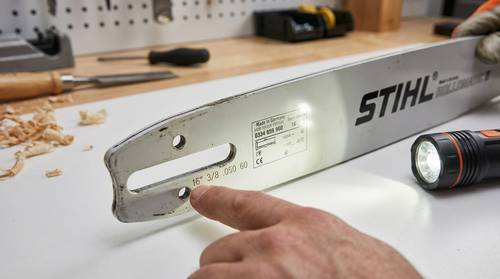
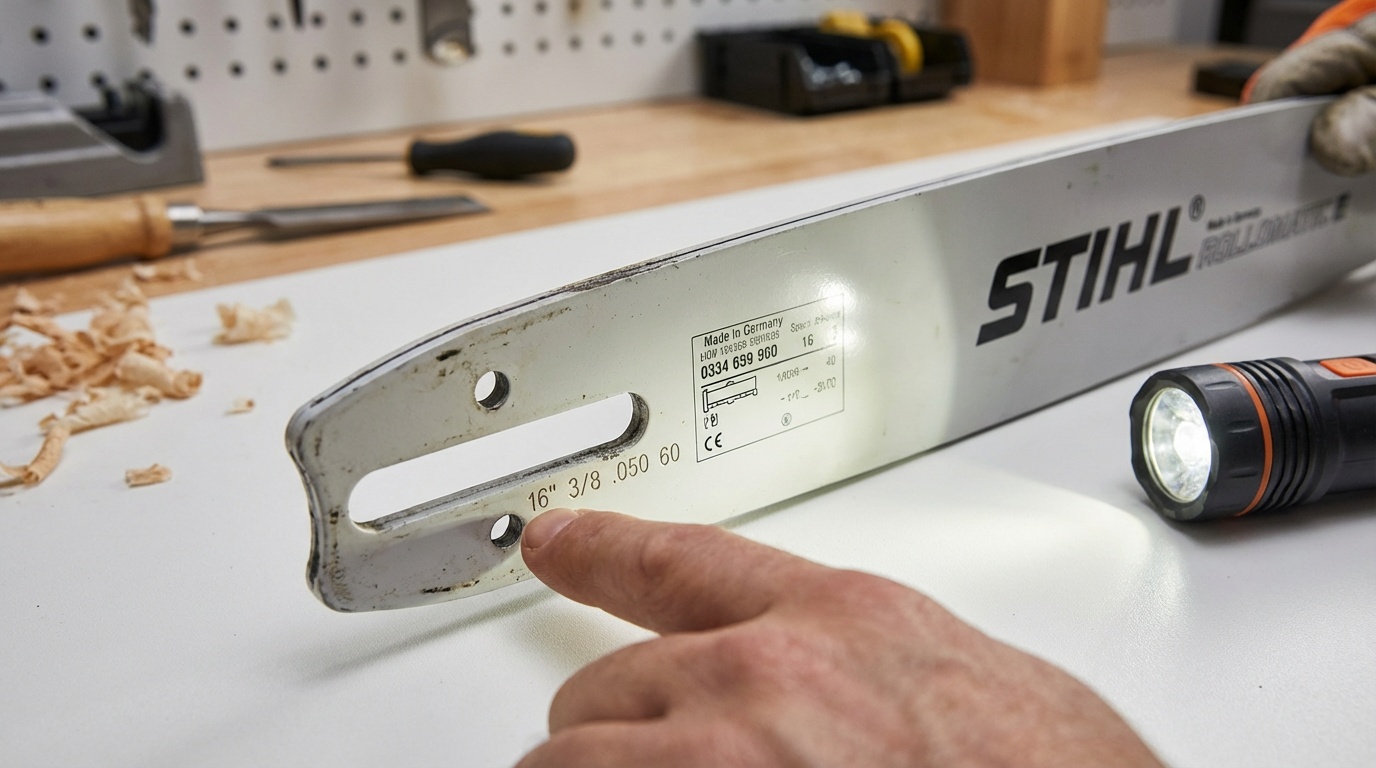
Most bars have all three key specifications stamped near the mounting area. A marking such as 16" 3/8 .050 60 tells you:
- 16 inch bar length
- 3/8 pitch
- .050 gauge
- 60 drive links
This is often the fastest way to find your chainsaw chain specifications without doing any calculations.
Once you identify pitch, gauge, and drive links, you have everything needed to measure chainsaw chain size accurately and order the correct replacement with confidence.
How to Measure Chainsaw Bar Length

Knowing how to measure chainsaw bar length is just as important as knowing how to measure chainsaw chain. The bar length determines how many drive links your replacement chain needs.
There are two different measurements you should understand.
Called Length: The Measurement You Actually Need
The called length is the effective cutting length of the bar. This is the number manufacturers use when they say you have a 16 inch or 18 inch chainsaw.
How to measure chainsaw bar called length:
Make sure the saw is turned off and the chain brake is engaged.
Place a tape measure at the front of the saw body where the bar exits the housing. Measure straight to the tip of the bar.
Round up to the nearest even number. For example:
- If you measure 15.5 inches, your bar is called 16 inches
- If you measure 17.75 inches, your bar is called 18 inches
Most bars are sold in even sizes such as 12", 14", 16", 18", and 20". The actual physical bar may measure slightly less than the advertised length.
This is the measurement you need when buying a replacement chainsaw chain or bar.
True Length: The Overall Bar Length
The true length is the total physical length of the entire bar. This includes the section that sits inside the saw body.
You rarely need this measurement unless you are ordering a specialty or custom bar.
How to measure true length:
Remove the bar completely from the chainsaw.
Lay it flat on a table and measure from the very back end to the tip.
This measurement is usually 2 to 3 inches longer than the called length.
Bar Groove Width and Gauge
The guide bar has a groove that the chain rides in. The width of this groove must match the chain gauge exactly.
Common groove widths include:
- .050"
- .058"
- .063"
This value is almost always stamped on the bar. If the groove becomes worn and wider over time, the chain may wobble and performance will suffer.
Bar Condition Check
While you are measuring, take a few minutes to inspect your bar.
Look for:
- Rails that are bent or uneven
- Excessive groove wear
- Burrs along the edges
- A damaged or stiff nose sprocket
If the bar shows heavy wear, replacing both the bar and the chain at the same time is often the smarter choice.
Quick Summary: How to Measure Chainsaw Bar
If you are unsure how to measure chainsaw bar correctly, remember this simple rule.
Measure from the front of the saw body to the tip of the bar. Round up to the nearest even inch. That is your called length.
Combine this with your pitch, gauge, and drive link count, and you have all the information needed to choose the correct replacement chainsaw chain with confidence.
Where to Find Chainsaw Chain and Bar Specifications
Before you grab a ruler and start measuring, check your equipment first. In many cases, the information you need is already printed somewhere on your saw or bar.
Here are the fastest ways to find your specs without guesswork.
Check the Guide Bar First
This is the easiest and fastest method.
Most guide bars have the key chainsaw chain specifications stamped near the mounting end. Look close to where the bar attaches to the saw body. You may also find markings on the flat side of the bar.
A typical stamp might look like this:
- 16" 3/8 .050 60
This means:
- 16 inch called bar length
- 3/8 pitch
- .050 gauge
- 60 drive links
If you can clearly read this stamp, you already know how to find chainsaw chain size without measuring manually.
If the stamp is dirty or faint, clean the bar with a brush and degreaser. Use a flashlight at an angle to make faded numbers more visible.
Check the Chain Itself
Some manufacturers stamp pitch information directly onto the drive links.
Remove the chain and inspect the flat part of the drive links closely. You might see markings such as:
- 3/8
- .325
- LP for low profile
Not all chains have visible markings, so this method does not always work. Still, it is worth checking before you begin measuring.
Check the Owner’s Manual
Your chainsaw manual lists factory specifications for pitch, gauge, and recommended bar lengths.
If you still have the printed manual, check the technical specifications section. If not, search online using your exact model number followed by the phrase owner’s manual PDF.
Keep in mind that a previous owner may have changed the bar or chain. Always confirm that your current setup matches the manual specifications.
Use Your Chainsaw Model Number
If you cannot read the bar stamp, look for the model number on the saw body.
Common locations include:
- Near the engine cover
- On the starter housing
- Under the chain brake handle
Once you find the model number, search online for the official specifications. This is often one of the fastest ways to figure out how to measure chainsaw chain size correctly.
Check Old Packaging or Receipts
If you still have the packaging from your previous replacement chain, check it carefully.
It usually lists:
- Pitch
- Gauge
- Drive link count
This is reliable only if you are sure the previous chain was the correct fit.
When to Measure Manually
If you cannot find readable stamps, manuals, packaging, or model details, then it is time to measure manually.
Use the steps from the previous sections to measure pitch, gauge, and drive links carefully. This ensures you get the exact chainsaw chain dimensions you need.
In most cases, though, checking the guide bar stamp first will save you time and effort.
How to Order the Correct Replacement Chain
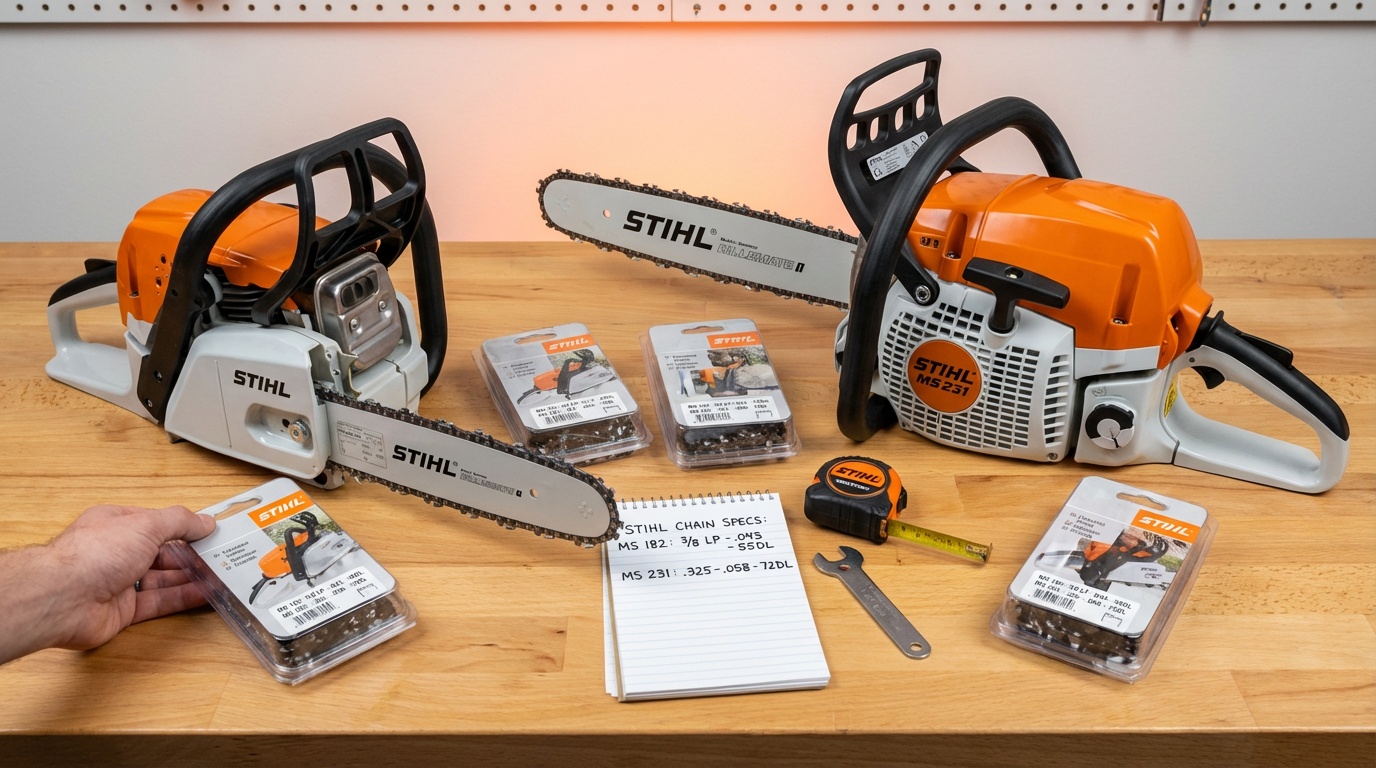
Once you know how to measure chainsaw chain properly, ordering the right replacement becomes simple. The key is having the correct pitch, gauge, and drive link count written down before you shop.
Here is how to make sure you get exactly what you need the first time.
Step 1: Organize Your Specifications
Before placing an order, write down all three measurements clearly.
Example:
- Pitch: 3/8"
- Gauge: .050"
- Drive Links: 60
You may also see this written as: 3/8 - .050 - 60DL. DL stands for drive links.
It also helps to note your bar length, such as 16 inch. While bar length alone is not enough, it helps confirm compatibility.
Step 2: Choose the Right Chain Type
Beyond size, consider how you actually use your chainsaw. Different chain styles are designed for different cutting needs.
Common chain types:
- Full chisel: Fast and aggressive cutting. Best for clean, soft wood and experienced users.
- Semi chisel: Slower than full chisel but stays sharp longer. Great for hardwood and general homeowner use.
- Low profile: Designed to reduce kickback. Ideal for beginners and occasional users.
If safety and ease of use are your priorities, low profile or semi chisel chains are usually the best choice.
Step 3: Decide on Brand and Quality
You have several options when buying a replacement chainsaw chain.
OEM chains: Manufactured by the same brand as your saw. They offer guaranteed compatibility and premium quality.
Aftermarket premium brands: Often provide similar performance at a lower price.
Budget chains: Suitable for occasional light use, but may dull faster.
Choose based on how often you use your saw and the type of cutting you do.
Step 4: Consider Buying More Than One
Many professionals keep multiple chains on hand.
- Swap chains instead of sharpening mid job
- Reduce downtime
- Extend overall chain life by rotating use
Even for homeowners, having at least one spare chain is smart. If a chain breaks during a project, you will not have to stop work.
Step 5: Double Check Before You Click Buy
Before completing your purchase, review your details carefully.
- Does the pitch match your sprocket?
- Does the gauge match your bar groove?
- Is the drive link count exact?
- Is the chain type suitable for your needs?
Common mistakes include ordering by bar length only or confusing 3/8 with 3/8 low profile. Small differences matter.
Taking two extra minutes to verify your chainsaw chain specifications prevents returns, delays, and safety risks.
Once everything matches, you can order your replacement chainsaw chain with full confidence and get back to cutting safely and efficiently.
Now you know exactly how to measure chainsaw chain the right way. Every chain is defined by three numbers: pitch, gauge, and drive links.
Get those right and your replacement will fit perfectly.
Remember, pitch determines sprocket compatibility. Gauge must match the bar groove exactly. Drive links define the total chain length. And when learning how to measure chainsaw bar length, measure from the front of the saw body to the tip and round up to the nearest even inch.
Taking a few minutes to confirm your chainsaw chain specifications saves money, avoids frustration, and keeps your saw running safely. With the right measurements in hand, you can order with confidence and get back to cutting without guesswork.